
Introducing the Agents API
Mainly relevant if your organisation builds its own AI tools or integrations rather than just using ChatGPT day-to-day — it gives developers a ready-made, managed foundation for building reliable agents that run tasks over time, instead of having to build that orchestration and sandboxing infrastructure themselves.
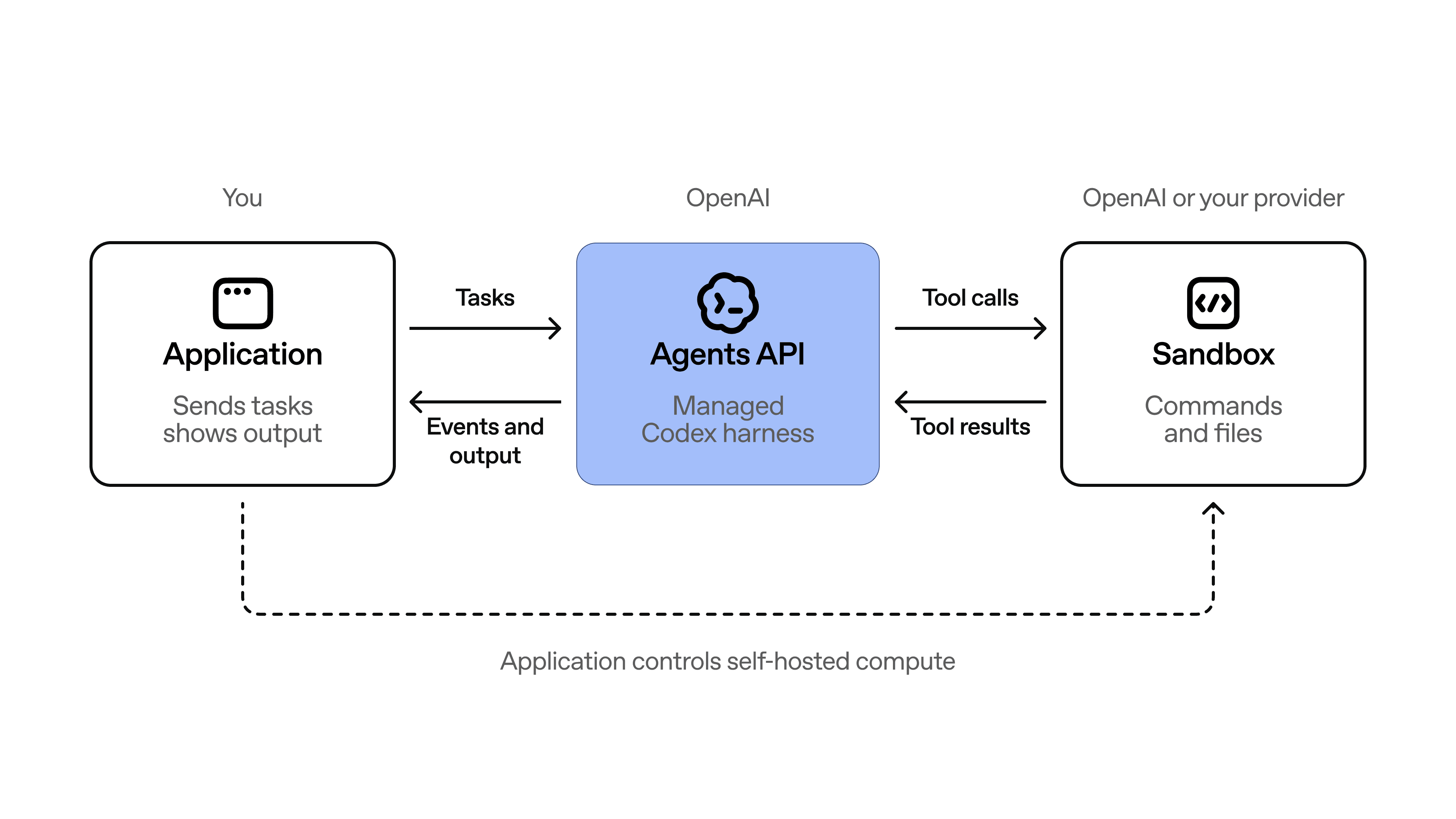
What changed
Source summary
OpenAI released the Agents API in public beta, giving developers a single API to build production-ready agents. It brings the same infrastructure that powers Codex — session management, tool orchestration, hosted or self-managed sandboxes, and context recovery — to external developers.
Why it matters to your work
Practical interpretation
Mainly relevant if your organisation builds its own AI tools or integrations rather than just using ChatGPT day-to-day — it gives developers a ready-made, managed foundation for building reliable agents that run tasks over time, instead of having to build that orchestration and sandboxing infrastructure themselves.
When this could help
Building agents that run long tasks, need to split work across parallel subagents, or need sandboxed code execution without building that infrastructure in-house
Brings the same managed infrastructure that powers Codex — session management, tool orchestration, hosted or self-managed sandboxes, and automatic context compaction — to any developer through a single API, with versioned harness updates on each model launch
How to get started
Start with the quickstart guide to create a first agent
Provider guidance ↗Choose an environment: the OpenAI-hosted sandbox for fast setup, or a self-hosted/partner sandbox (Blaxel, Cloudflare, Daytona, DigitalOcean, E2B, Modal, Oracle, Runloop, Vercel) for more control
Provider guidance ↗
What to check
- Public beta — features and behaviour may change before general availability Source ↗
- No specific session-duration or concurrency limits are documented in the announcement Source ↗
- Sandbox choice affects cold-start time, performance, and cost, so the environment needs to be matched to the workload Source ↗
Sources & provider guides
Official documentation checked 12 Oct 2026. SCALA prompts and workflows are suggestions, not claims of hands-on testing.
Source & availability
This is a summary of a published provider announcement, with practical context from SCALA’s feed.
Plan, region, workspace and rollout conditions may affect access in Australia. Check the original source for current availability.
openai.comThis update is primarily for technical teams.